 Discover the Natural Beauty


Fall Hours: Mon-Sat: 9am-5:30pm, Sun: 10am-4:00pm
Final Week!
THIS WEEK
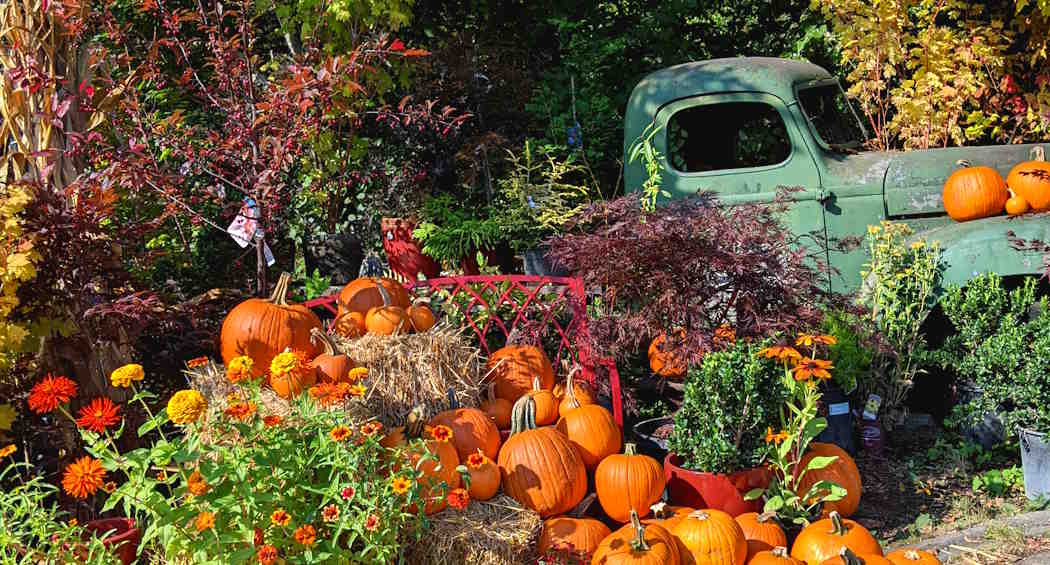
Last week for The Pumpkin Walk - We now have well over 400 pumpkins! Thank you! For more about the Pumpkin Walk check out the article below!
EAT AND GROW
GREAT GARLIC
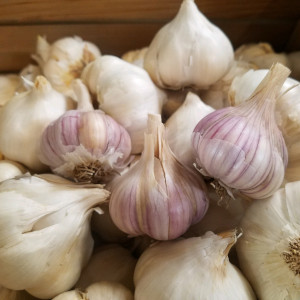
If you haven't had non-supermarket garlic, you are in for a treat. Varieties like Chesnok Red or Spanish Roja will blow you away with their gorgeous aromas and depth of flavor. (We mention Chesnok Red, because we recently had an in-house garlic tasting, and it came out on top, though each variety had its own interesting qualities.)
If you are unsure of what variety to grow, buy a few garlic bulbs and try them out! Seed garlic bulbs are edible (the ones we get are not treated).
Garlic is relatively easy to grow if you pick a good spot and prepare the soil correctly. Garlic is planted in the fall and harvested at the end of the following summer. As you would expect, you're going to want rich, well-draining soil, so your garlic doesn't rot during the winter. It grows well in a raised bed too.
While that's a long investment of time, the payoff is delicious garlic bulbs next summer...and a harvest of garlic scapes in the spring!
We have five varieties of garlic in stock. (Plus elephant garlic, which by the way, isn't a true garlic. It's a member of the leek family. It's delicious nonetheless.)
Now is the time to plant garlic. Come on in for our garlic handout.
HOW DOES A
PUMPKIN WALK?
Open now through the month of October.
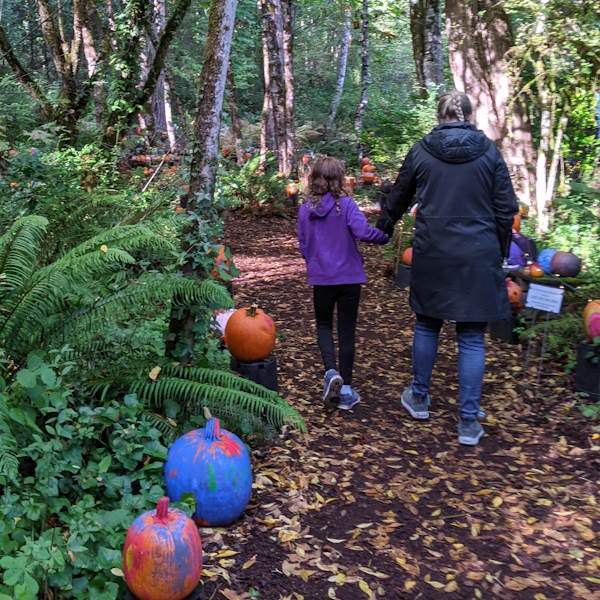
The Pumpkin Walk is back for its 33rd year (wow)! If you're not familiar with it, The Pumpkin Walk is a family-friendly event that goes on throughout October.
Our trail through the woods has hundreds of decorated pumpkins and larger vignettes. In addition there are kid-friendly photo areas and fun stuff for the little ones.
Much of the success of the Pumpkin Walk is due to contributions by our customers! Last year, customers added well over 400 hundred pumpkins to our trail!
The Pumpkin Walk is free. We do accept donations to the Bainbridge Island Boys and Girls Club. This event benefits our local club.
Every Saturday, we will have a food truck!
For more details on the Pumpkin Walk and how you can add your own pumpkins to the trail, click here.

IT'S FEELING CRISP OUT THERE
Now that the heat is behind us, we can finally enjoy fall. As it gets cooler, plants slow down and divert their energy to winter survival. There are things we can do to help our plant friends prepare for the long winter and emerge in the spring extra strong:
- Do a light mulching of your garden beds with compost. Compost helps add organic matter to soils that have been depleted by all the watering we needed to do over a long dry summer. This layer also protects roots from extreme cold and as we move into the next year, holds onto moisture and keeps the roots cool.
- In general, you don't need to fertilize established plants at this time of year, because you don't want to encourage new growth that might be damaged by frost or a deep freeze. However, for established woody plants, applying Soil Science Bloom Driver or EB Stone Ultra Bloom encourages root and flower growth for the upcoming season, especially for lilacs, camellias, rhododendrons and fruit trees. These products have a low amount of nitrogen but high enough phosphorous.
- It's a good idea to give your lawn one more dose of fertilizer before winter. This helps give roots a boost so your lawn comes back stronger in the spring. Pick a time that's not too rainy (or the fertilizer will just wash away) and before a deep freeze when the grass is dormant.
- Before we get into our storm season, it's good to thin out tree and shrub branches that may be encroaching on your paths, driveways or above your house. As long as you're not removing more than 20% of the overall volume of your plants, you are not setting back their health. It’s better to make those pruning cuts yourself rather than having the wind or wet snow do the trimming for you.
- If you have veggies growing, such as leafy greens, you should consider covering them with a cold frame or cloche to extend the season.
- Consider getting some Reemay or protective material (Harvest Guard) to cover your tender plants before a cold spell. Also, you may want to move potted tender plants to a protected area before such a spell.